An electrical inspection Passaic County, NJ homeowners search for usually isn't idle curiosity — it's a closing date, an insurance renewal, or a breaker that trips every time the microwave runs. This guide breaks down real cost ranges, the warning signs worth acting on, and exactly what an inspector checks room by room. Read it before you book, and you'll know whether that quote is fair.
Electrical Inspection Cost in Passaic County, NJ
Cost is the first question almost everyone asks, and the range is wider than most people expect. The average electrical inspection cost in Passaic is $172 to $199, but it could vary from $159 to $212. Treat that as a planning number, not a quote — your actual price depends on home size, panel age, and how many circuits need testing.
A lot of homeowners schedule their first inspection when they're preparing to sell their home. Others call after a renovation, an insurance request, or a scare like a warm outlet cover. Each scenario calls for a slightly different scope, which is why pricing isn't one-size-fits-all.
| Inspection Type | What's Covered | Typical Use Case |
|---|---|---|
| Basic visual check | Panel, visible wiring, outlet spot-checks | General safety snapshot, routine peace of mind |
| 4-point inspection | Panel, wiring, plumbing connections, roof age (insurer form) | Older homes renewing or shopping homeowner's insurance |
| Full-system inspection | Panel, grounding/bonding, every outlet, GFCI/AFCI, smoke/CO devices | Home purchase, major renovation, suspected hazard |
For an accurate number on your own property, request a quote through our electrical inspection service page.
Signs You May Need an Electrical Inspection
Some warning signs are loud. Others are quiet enough that homeowners live with them for years before calling anyone. Watch for:
- Breakers that trip repeatedly, especially on the same circuit
- Lights that flicker or dim when another appliance kicks on
- Buzzing, humming, or crackling sounds from outlets or the panel
- Warm switch plates or a faint burning smell near outlets
- Outdated two-prong outlets with no ground
- Heavy reliance on extension cords instead of adding circuits
Electrical failures are a persistent cause of residential fires nationwide. In 2020–2024, local fire departments responded to an estimated annual average of 46,652 home structure fires where an electrical failure or malfunction was reported as a contributing factor.
Those fires caused an estimated annual average of 527 civilian deaths, 1,580 civilian injuries, and $2.4 billion in direct property damage each year, according to NFPA research. If any of the symptoms above sound familiar, it's worth scheduling a look before the issue grows.
When Should Homeowners Schedule an Electrical Inspection?
Most Passaic County inspections get booked around one of two moments: a real estate transaction or a renovation. Both situations put extra demand or scrutiny on a system that may not have been checked in years.
Before Buying or Selling a Home
Passaic County's older housing stock makes a pre-purchase inspection especially worthwhile, since many homes predate modern grounding and GFCI requirements. A pre-sale inspection gives buyers leverage to negotiate and gives sellers fewer surprises at the closing table.
Before Major Renovations
Adding appliances, remodeling a kitchen, finishing a basement, or installing an EV charger all add load to wiring that was likely sized for a different era of electricity use. A renovation inspection confirms the existing system can handle it before the drywall goes up, not after. If your renovation plans include more light fixtures, it's worth pairing the inspection with a look at our lighting upgrades options — we cover a similar approach in Lighting Installation Services in Morris County, NJ (2026).
What Happens During an Electrical Inspection?
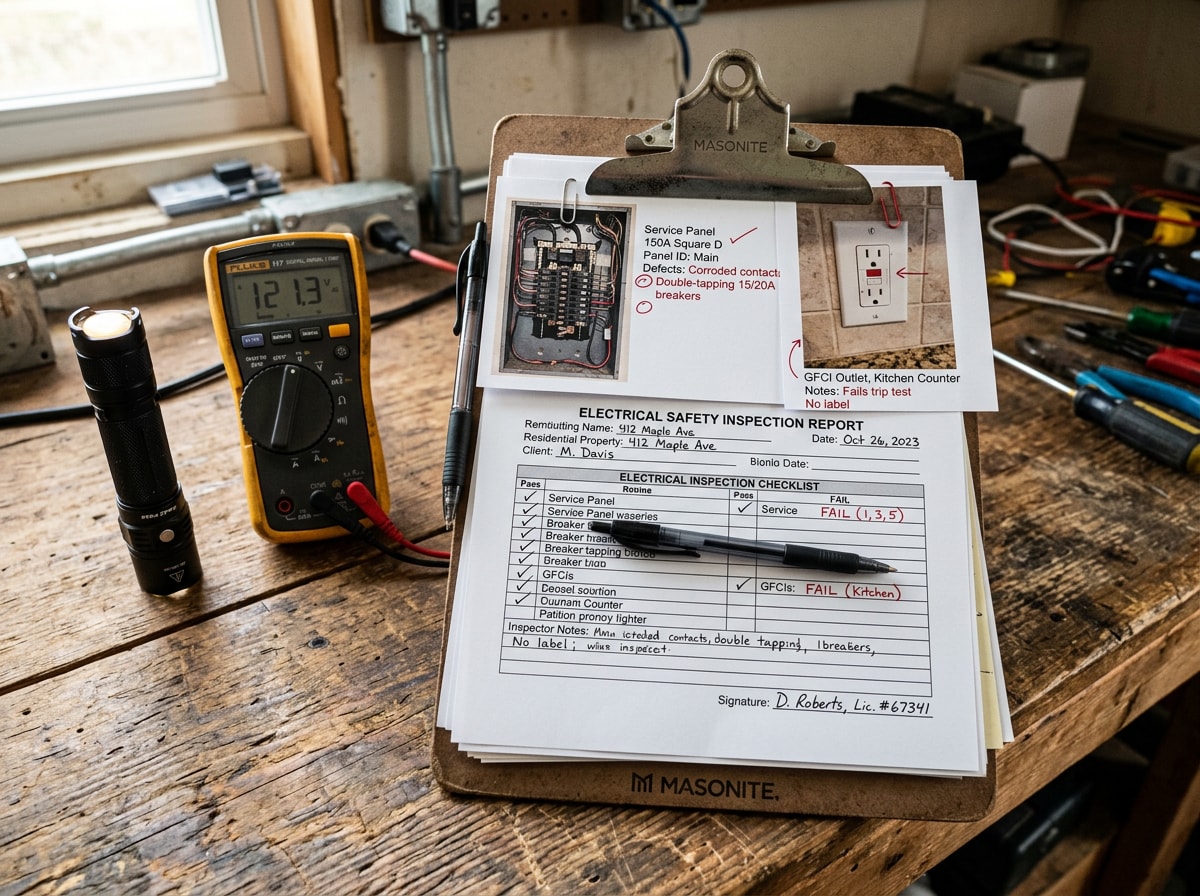
An inspection is a guided walkthrough of your home's electrical system, room by room, ending with a written report of what was found.
What We Check For During Your Inspection
A typical checklist covers:
- The service drop, grounding, and bonding
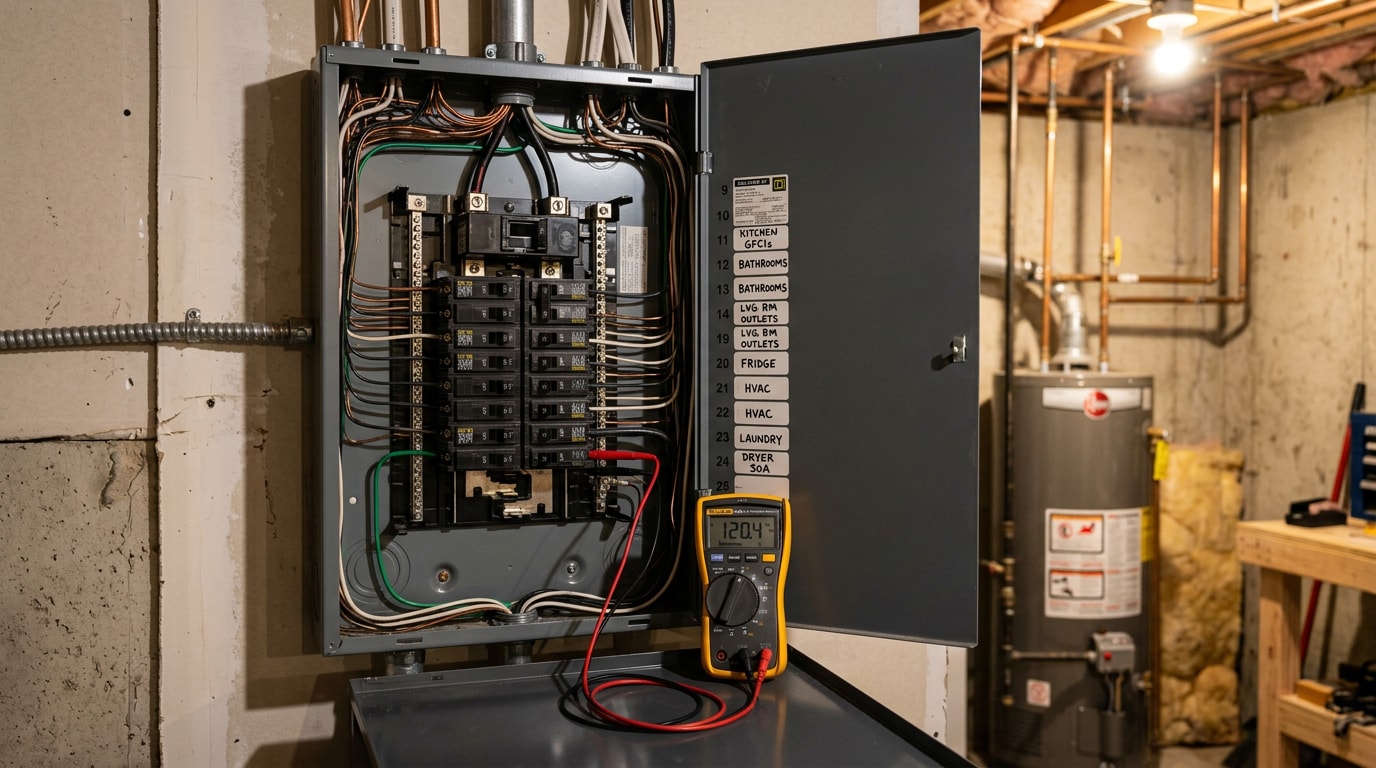
- The main panel's condition, breaker type, and amperage
- Outlet polarity and GFCI/AFCI protection in kitchens, bathrooms, garages, basements, and outdoor areas
- Smoke and CO detector age and interconnection
- Visible wiring condition in the attic, basement, and crawl space
Picture a 1960s ranch in Clifton or Paterson: original two-prong outlets in the bedrooms, a dated panel in the basement, and no GFCI protection near the kitchen sink. In our visits to homes exactly like this across Passaic County, we flag all three almost every time — it's less a sign of neglect and more a sign the house simply predates modern code.
Worth knowing for 2026: on August 17, 2026, New Jersey officially adopted the Uniform Construction Code (UCC) 2024, which includes updated model codes for the building, mechanical, electrical and plumbing subcodes. That update brings New Jersey's electrical subcode in line with the 2023 NEC, which generally expects broader AFCI and GFCI coverage than the edition it replaces. Existing, untouched wiring is typically grandfathered, but new work and renovations will be held to the newer standard. You'll receive a full inspection report with photos, not just a pass/fail note.
Federal Pacific, Zinsco, and Other Known Bad Panels
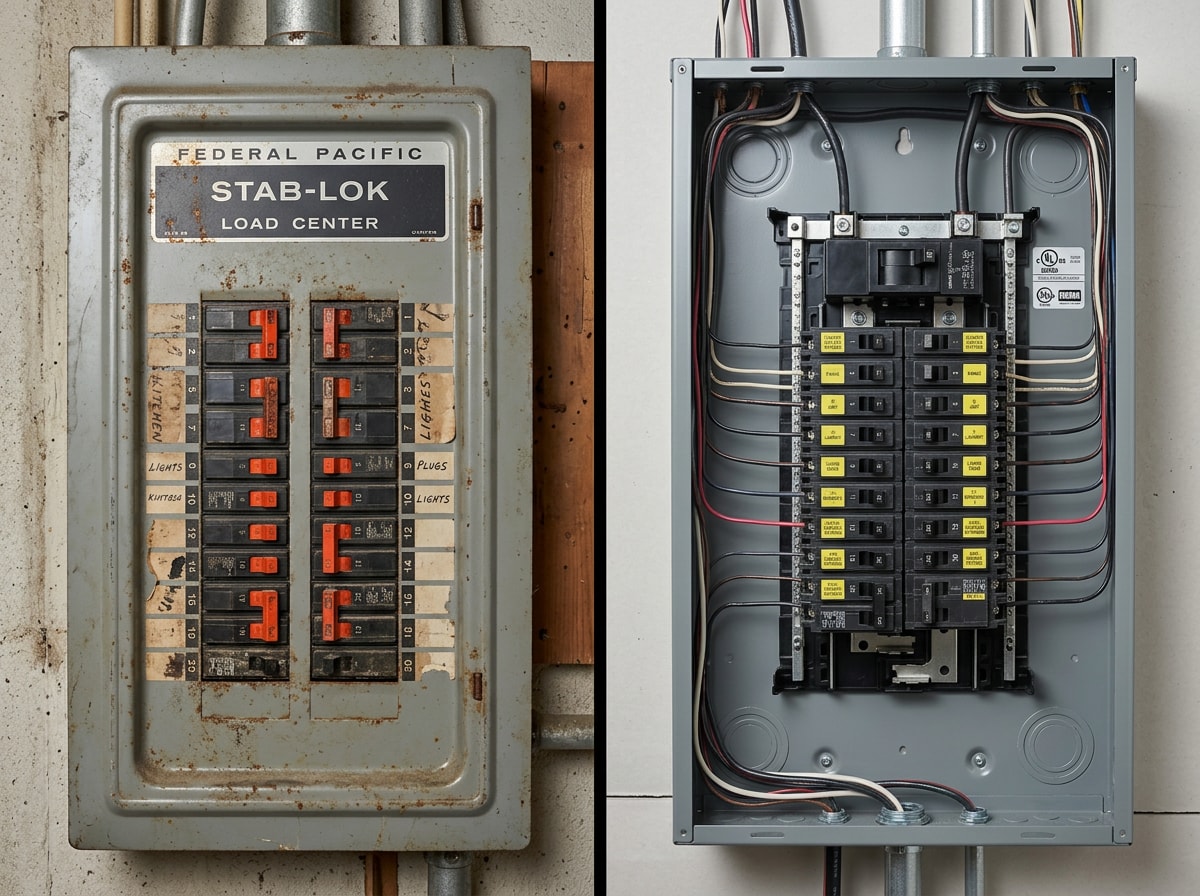
A surprising number of older New Jersey homes still run on Federal Pacific Stab-Lok or Zinsco panel equipment, brands long flagged for breakers that fail to trip when they should. Inspectors specifically look for these during a panel inspection.
The concern isn't new or fringe. The Consumer Product Safety Commission investigated Federal Pacific Electric Stab-Lok type residential circuit breakers for two years and closed its probe in 1983, stating the data available did not establish that the breakers posed a serious risk of injury. Independent testing told a different story. Fifty-one percent of the tested breakers failed to trip in the research submitted to the CPSC by engineer Jesse Aronstein's team. That split between the official finding and the independent test data is exactly why most electricians recommend replacement rather than repair once a Stab-Lok panel turns up.
If one turns up in your home, it typically means planning a panel upgrade rather than a repair, since the breaker design itself is the underlying problem. Finding an outdated panel doesn't mean panic — it means plan.
Residential, Commercial & Industrial Electrical Inspection Services
Passaic County electricians generally inspect three property types: homes (panel condition and general safety), businesses (code-compliance checks for permits and insurance), and industrial facilities (full-system reviews before new equipment goes in). A residential inspection and a commercial one share the same fundamentals but differ in scale and documentation. Browse our electrician services or our commercial electrical contracting page, or check coverage across Passaic County to find the right fit. You can also start from our homepage to see our full range of electrical and lighting services.
FAQ
How much does an electrical inspection cost in Passaic County?
Local averages run $172 to $199, with a typical range from $159 to $212 depending on home size and scope. A 4-point insurance inspection or a full-system review will shift that number up or down.
What is involved in a home electrical inspection?
An inspector examines the panel, wiring, grounding, and outlets to confirm the system doesn't have deficiencies that would violate current safety codes, then hands you a written report with photos.
How long does an electrical inspection take?
Most inspections take one to two hours, depending on home size and how much of the wiring is accessible without opening walls.
Do I need a permit for electrical work in NJ?
Yes. Under the New Jersey Uniform Construction Code (UCC), electrical permits are required for most residential and commercial projects involving new circuits, new wiring, or new service equipment. Simple like-for-like swaps, such as replacing a broken outlet with the same type, are generally exempt.
How often should a home get an electrical inspection?
Most electricians recommend a full inspection every 3 to 5 years for homes under 20 years old, and more frequent checks for older homes, rental properties, or any home with a known outdated panel. Homes changing ownership should always get one regardless of when the last inspection happened.
---
This guide reflects what the electricians at NJ Queue Electrical see on actual inspection calls across Passaic County towns like Clifton, Paterson, Wayne, and Passaic itself. If a flickering light, an insurance form, or an upcoming closing has you thinking about an inspection, get a free estimate and we'll walk you through the scope and price before any work starts.