Switchgear repair in Morris County, NJ, usually starts with one warning sign: a breaker that won't stop tripping, or a panel that smells faintly of burnt plastic. Ignore it and you risk an unplanned outage or a genuine safety hazard, so the real question isn't "repair or not" but whether you're looking at a quick fix or equipment nearing the end of its service life. This guide breaks down the warning signs, the repair-versus-replace math, and what actually happens during a proper repair visit.
What Is Switchgear?
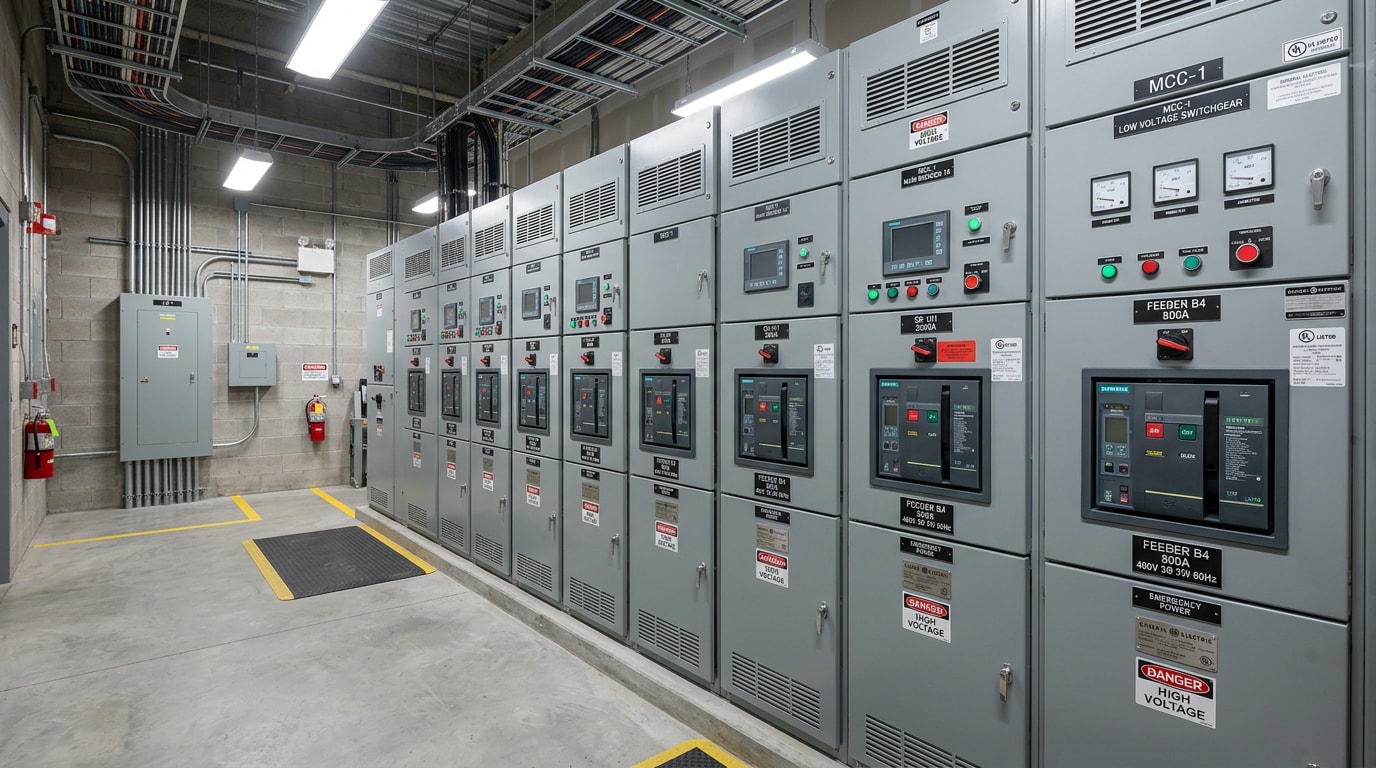
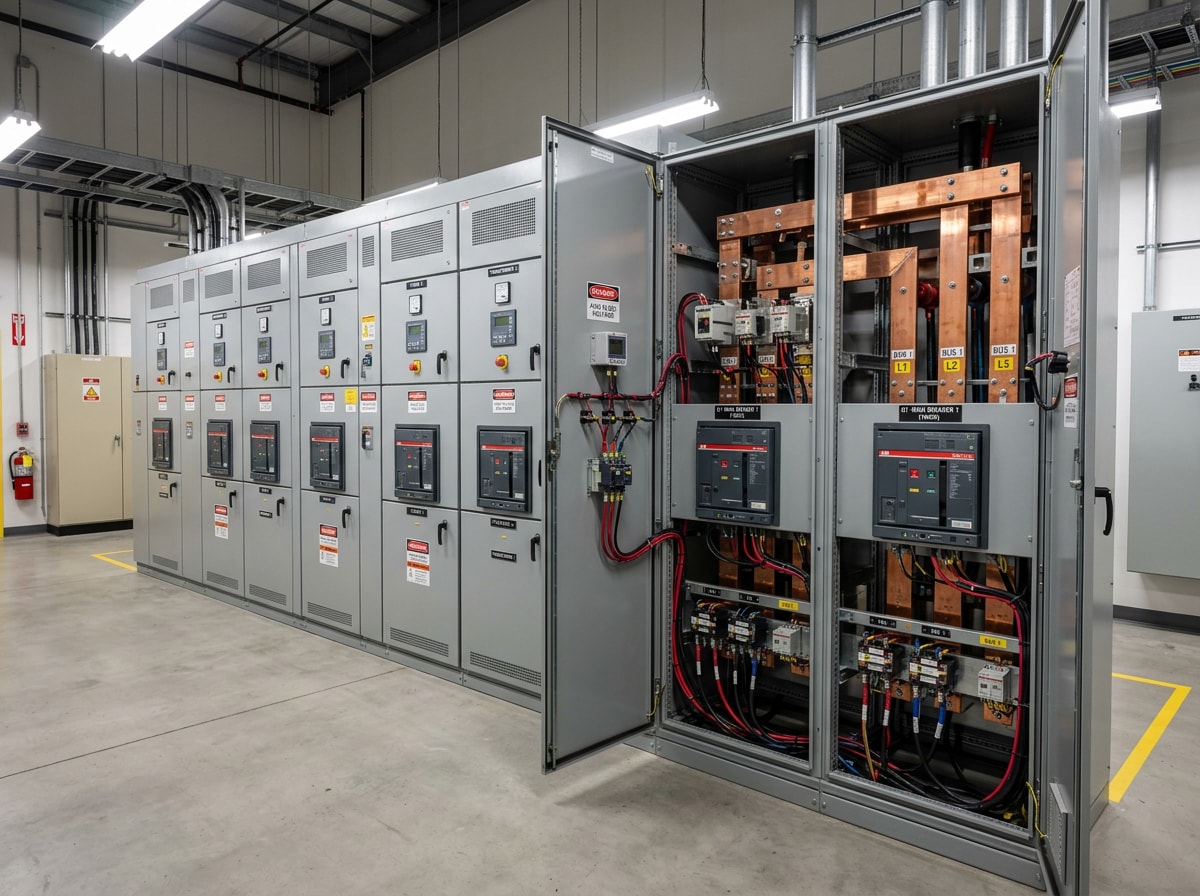
Switchgear is the assembly of disconnect switches, circuit breakers, fuses, busbars, and protective relays that controls and protects the flow of electricity through a building. It's the traffic controller for your electrical system: it routes power where it needs to go and cuts it off instantly when something goes wrong.
Commercial switchgear comes in low- and medium-voltage configurations, and both show up across office buildings, warehouses, and manufacturing sites throughout Morris County. Whether a facility runs on a 480-volt panel or a larger medium-voltage lineup, the job is the same: keep power flowing safely and shut it down the moment a fault appears.
Common Signs Your Switchgear Needs Repair
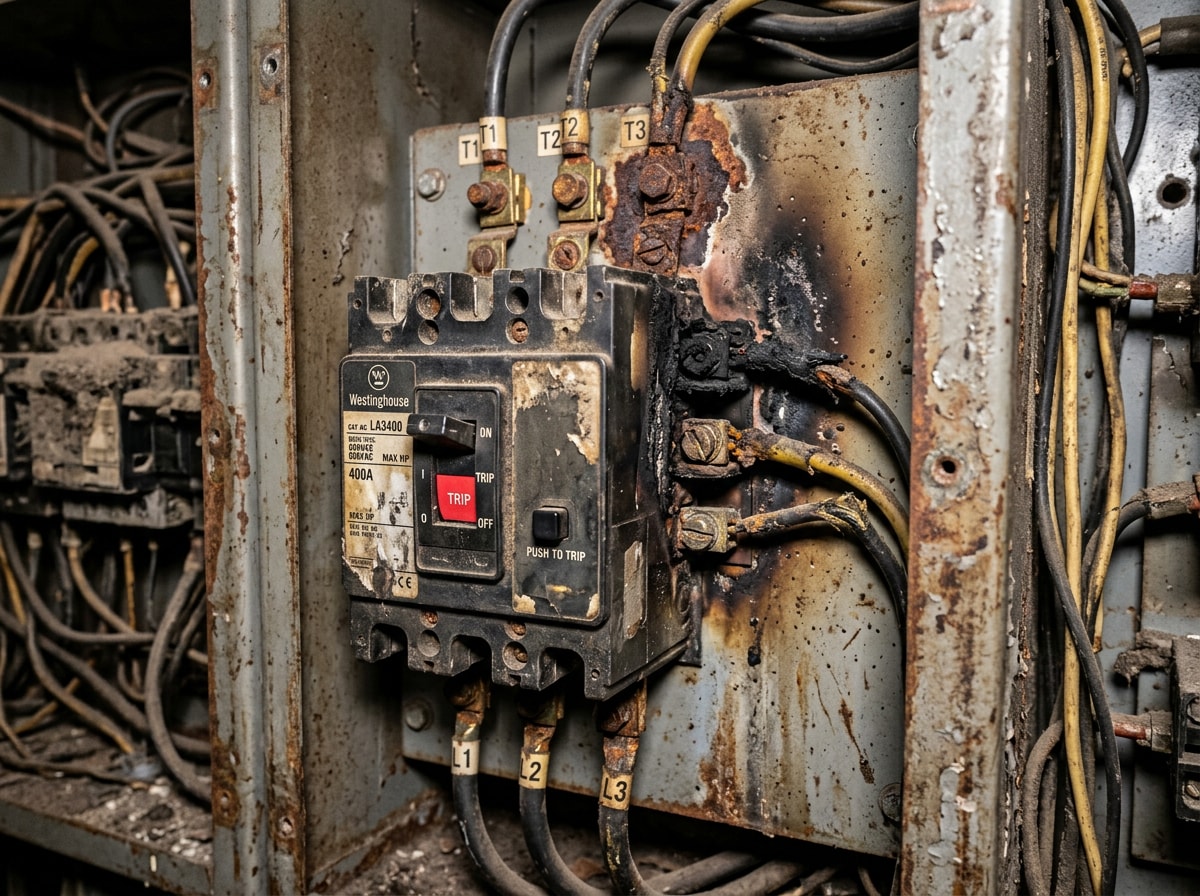
Switchgear rarely fails without warning. Most of the time, the equipment gives you a chance to catch the problem before it becomes an outage. Watch for:
- Unusual smells, especially a burning or ozone-like odor
- Buzzing, crackling, or humming from the enclosure
- Visible discoloration or scorch marks around breakers or bus connections
- Breakers tripping without a clear cause
- Hot spots found by touch or thermal scan
- Moisture intrusion or visible corrosion
- Breakers that feel stiff or difficult to operate smoothly
- Recent load additions without a professional capacity review
Not every sign carries equal weight. Repeat repairs on the same fault, parts backordered for weeks or months, or trips with no identifiable cause even after service, point less toward a quick repair and more toward equipment that's approaching the end of its useful life. If any of these symptoms show up at your facility, get ahead of it with electrical repair services rather than waiting for a full outage.
Repair vs. Replace: How to Decide
Three factors usually drive this call: the equipment's current condition, how often it's failing, and whether replacement parts are still available. A single relatively new breaker fault is often a clean repair. A lineup with recurring faults and discontinued parts is a different conversation.
Evaluating the current condition of electrical equipment and systems, along with the safety and operational risk it poses, is a core part of a documented maintenance program under NFPA 70B . That condition assessment, more than the equipment's age alone, should drive the repair-or-replace call.
Cost matters too, but not just the number on the invoice. Repeated small repairs on failing equipment can add up to more than one larger fix over a few years, especially once you factor in the business cost of each outage. Many contractors use a rule of thumb here: if a single repair costs more than roughly half of full replacement, replacement is usually the better long-term value.
Heading into 2026, lead times on obsolete breaker parts remain a real factor. Some components take months to source, which can tip the decision toward replacement even when a repair is technically possible. Compliance plays a role too: UL 1558 covers metal-enclosed, low-voltage power circuit breaker switchgear, while UL 891 addresses switchboards , and any equipment replaced or upgraded should meet the applicable standard for its construction type.
| Factor | Favors Repair | Favors Replacement |
|---|---|---|
| Fault history | First or isolated failure | Recurring faults on the same equipment |
| Parts availability | OEM parts in stock | Discontinued or months-long lead time |
| Repair cost | Under roughly half of replacement cost | Approaching or exceeding half of replacement cost |
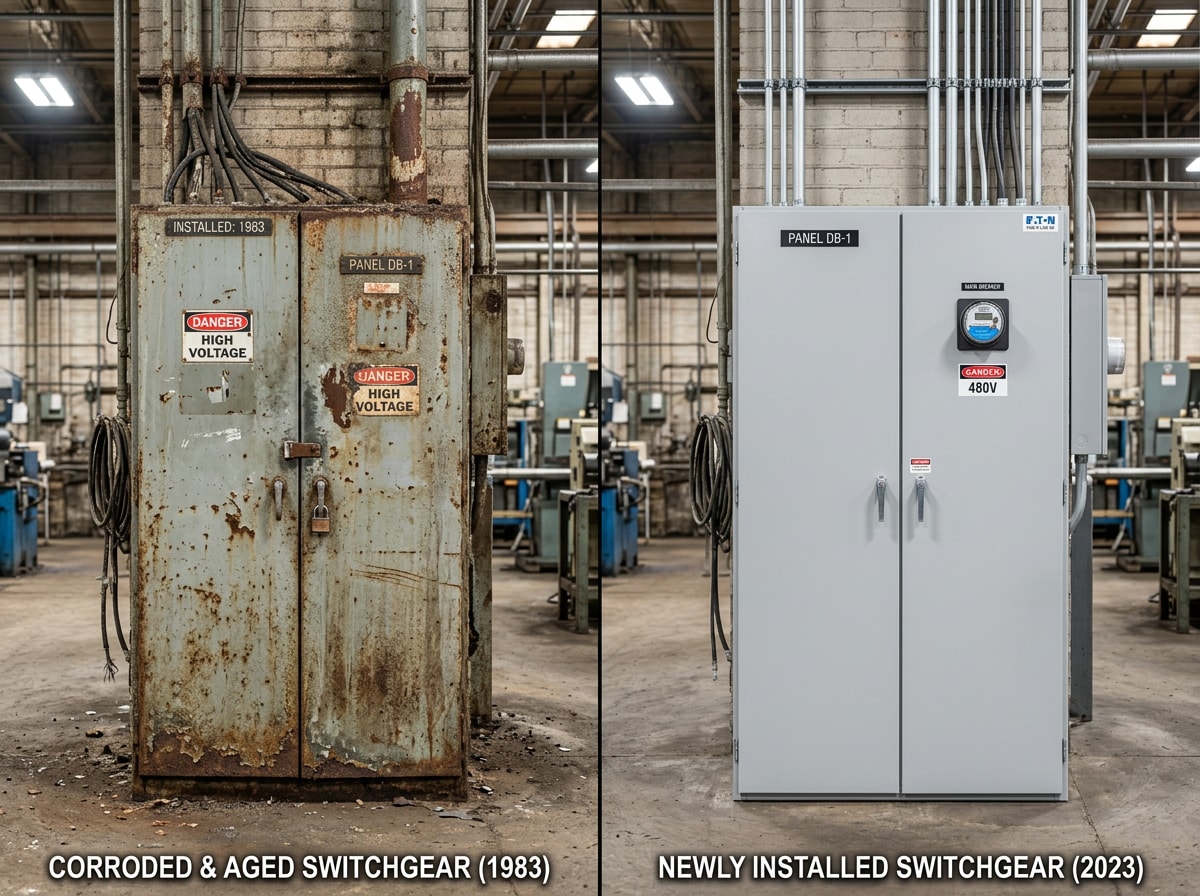
| Equipment age/condition | Good structural condition, isolated wear | Widespread corrosion, obsolete components |
| Compliance | Already meets current UL standards | Predates current code or listing requirements |
Why Switchgear Maintenance Can't Wait
Neglected switchgear doesn't just risk downtime, it risks lives. Loose connections and degrading insulation can lead to arc flash events, one of the most serious hazards in commercial electrical work. NFPA estimates that "five to ten arc flash explosions occur daily across the US" , and poorly maintained equipment is a recurring contributor in older facilities.
Proactive maintenance strategies can improve system reliability and reduce the likelihood of fire, electric shock, and arc flash incidents . There's a reliability angle that matters here in New Jersey, too: storm-driven outages are a recurring regional concern, and switchgear condition directly affects backup power reliability. If a generator transfer switch or main gear fails during a storm, your backup system can't help you.
The frustrating part is that switchgear often fails silently. Connections loosen and components degrade gradually, long before anyone notices a visible problem. Routine inspection, consistent with NFPA 70B, catches these issues while they're still cheap to fix.
How Often Should Switchgear Be Tested?
There's no single fixed interval that fits every facility. The ideal maintenance program is reliability-based, unique to each plant and to each piece of equipment , according to NETA's own guidance. Testing frequency depends on equipment criticality, age, failure history, environmental exposure, and manufacturer guidance.
Life-safety and emergency power systems generally need more frequent attention than non-critical circuits. Rather than chasing one universal number, the goal should be a documented, consistent schedule rather than a reactive one. You can review NETA's published maintenance frequency guidance for baseline intervals, then adjust based on your facility's own history. A professional electrical inspection is the starting point for building that schedule.
What a Professional Switchgear Repair Visit Includes
A proper visit involves more than a visual check.
- Cleaning components to remove dust and moisture buildup
- Lubricating moving parts and mechanisms
- Evaluating climate-control conditions in the equipment room, since excess heat or humidity accelerates wear
- Thermal imaging to catch hot spots before they cause failures
- Circuit breaker testing to confirm trip times and settings are accurate
- Breaker rebuilding or recalibration where the core components are still structurally sound
Older breakers and switches don't always need full replacement. Rebuilding and recalibration can often restore reliable performance at a fraction of the cost of new equipment.
What Drives Your Switchgear Repair Cost
Switchgear repair cost varies based on a few practical factors: how complex the system is, how accessible the equipment is on-site, and whether the work needs to happen after hours or on an emergency basis. A straightforward daytime repair on an accessible panel almost always costs less than an urgent weekend call on hard-to-reach gear.
When comparing quotes, look past the bottom-line number. A detailed quote should spell out the actual scope of work (cleaning, connection tightening, diagnostic testing) rather than a vague "inspection." It should also promise a written service report documenting findings and any recommended follow-up. If a quote reads like a one-line estimate, ask what's actually included before signing off.
Ready to get a clear picture of your repair costs? Get a Free Estimate from our team and we'll walk through the scope with you.
What We See Across Morris County Job Sites
Our crews run calls across towns like Dover, Parsippany, Morristown, and Rockaway, and the pattern repeats: decades-old low-voltage switchgear paired with newer tenant buildouts that have outgrown the original load calculations. That mismatch is one of the most common reasons breakers trip without an obvious cause, and it's rarely something a quick swap fixes without a load review first.
For facilities that want a maintenance relationship instead of waiting for an emergency, our commercial electrical contracting team handles ongoing switchgear care across the county. If you're also dealing with aging panels alongside switchgear concerns, our amp repair guide for Morris County covers panel-level troubleshooting in more detail.
You can see the full range of areas we cover on our Morris County service area page, and browse our complete electrical service lineup from our homepage.
FAQ
What exactly is switchgear, and why does it matter for my facility?
Switchgear is the electrical safety system that controls, protects, and isolates power distribution throughout a building. It shuts off power safely during a fault, protecting both equipment and people.
How often does my switchgear need to be serviced?
There's no universal fixed interval. Frequency depends on equipment age, condition, criticality, and environment. A documented, consistent schedule built around a professional assessment beats guesswork.
Is maintenance necessary if my power system seems to be working fine?
Yes. Hidden faults often develop silently, well before any visible symptom appears. Proactive maintenance catches these early, usually at a fraction of the cost of an emergency repair after a failure.
What should I look for in a repair or maintenance quote besides the price?
Look for a detailed scope of work, not just a price line. A solid quote outlines the specific tasks performed and includes a written report documenting findings and recommendations.
How much does switchgear repair typically cost?
It depends on system complexity, accessibility, and whether the work is emergency or scheduled. A straightforward daytime repair on accessible equipment costs noticeably less than an after-hours call on hard-to-reach gear. Request a quote for an exact number tied to your equipment.
What's the difference between switchgear and a standard electrical panel?
A standard panel distributes circuits for a single area or building section. Switchgear is a larger assembly of breakers, switches, and protective relays that controls and protects power for an entire facility or a major section of it, often ahead of multiple downstream panels.