Finding reliable lighting installation services in Morris County, NJ takes more than browsing a fixture catalog. It means checking licensing, permit handling, and whether the electrician actually understands older New Jersey wiring. This guide covers the full scope of work, from recessed cans to landscape systems, plus a 2026 code change that affects almost every new lighting circuit in the state.
Lighting Installation Services We Provide in Morris County, NJ
Whether finishing a basement in Denville, adding recessed lights to a Parsippany kitchen, or running landscape lighting around a Rockaway property, the work covers wiring, fixtures, permits, and final inspection. Licensed electricians handle indoor and outdoor lighting under one set of standards, detailed on our lighting contractor services page and backed by our work throughout Morris County, NJ.
Recessed Lighting
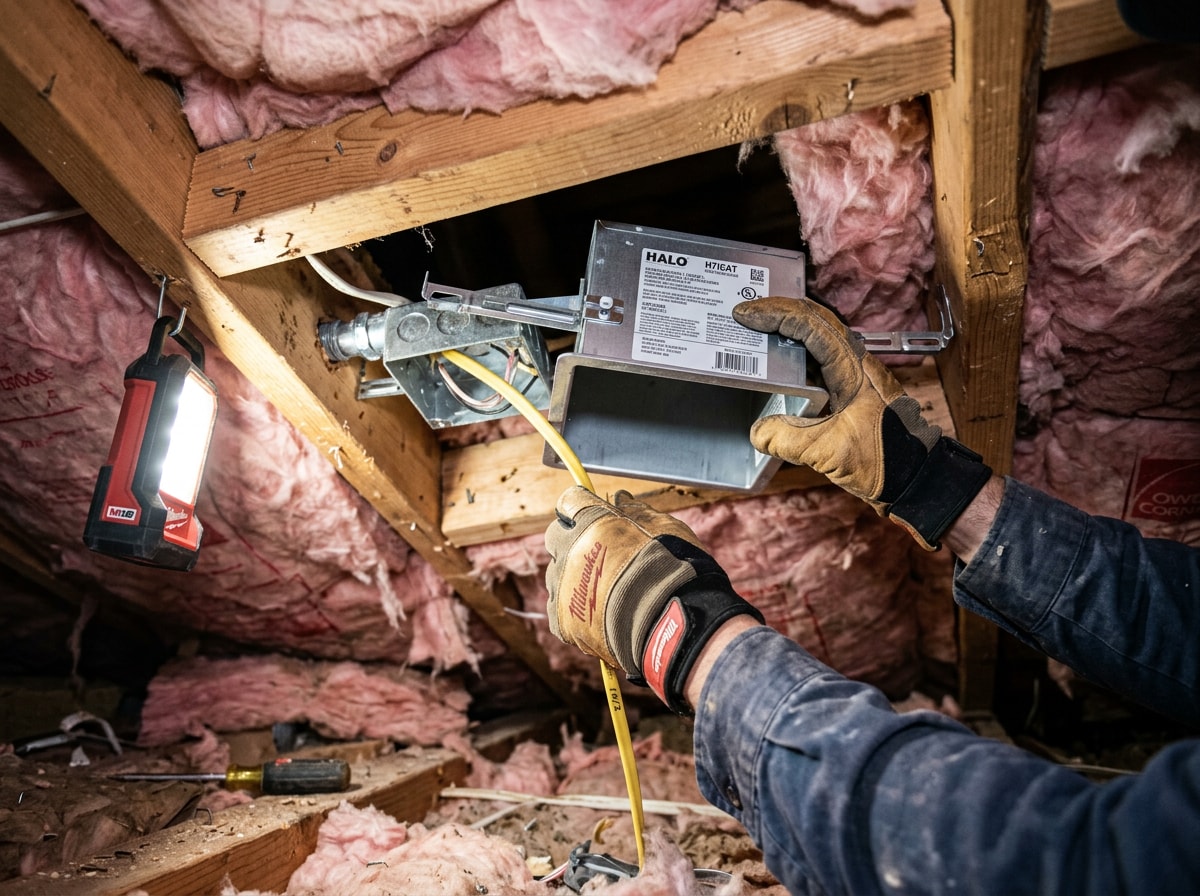
Recessed cans installed without the correct IC rating in an insulated ceiling create a fire hazard and a code violation. On a recent retrofit in a 1960s Randolph Township home, we opened a ceiling box and found insulation packed directly against three non-IC fixtures, exactly the setup the U.S. Department of Energy warns installers to avoid. Electricians assess the ceiling construction before cutting a single hole, specify IC-rated fixtures where insulation contacts the housing, and size the circuit so it won't get overloaded.
Non-IC fixtures aren't automatically off-limits. They just need clearance. DOE weatherization guidance requires enclosures around non-IC recessed lights to maintain 3” clearance between fixture (including wiring, box, and ballast) and insulation , with the enclosure built from fire-rated material and sealed around every edge.
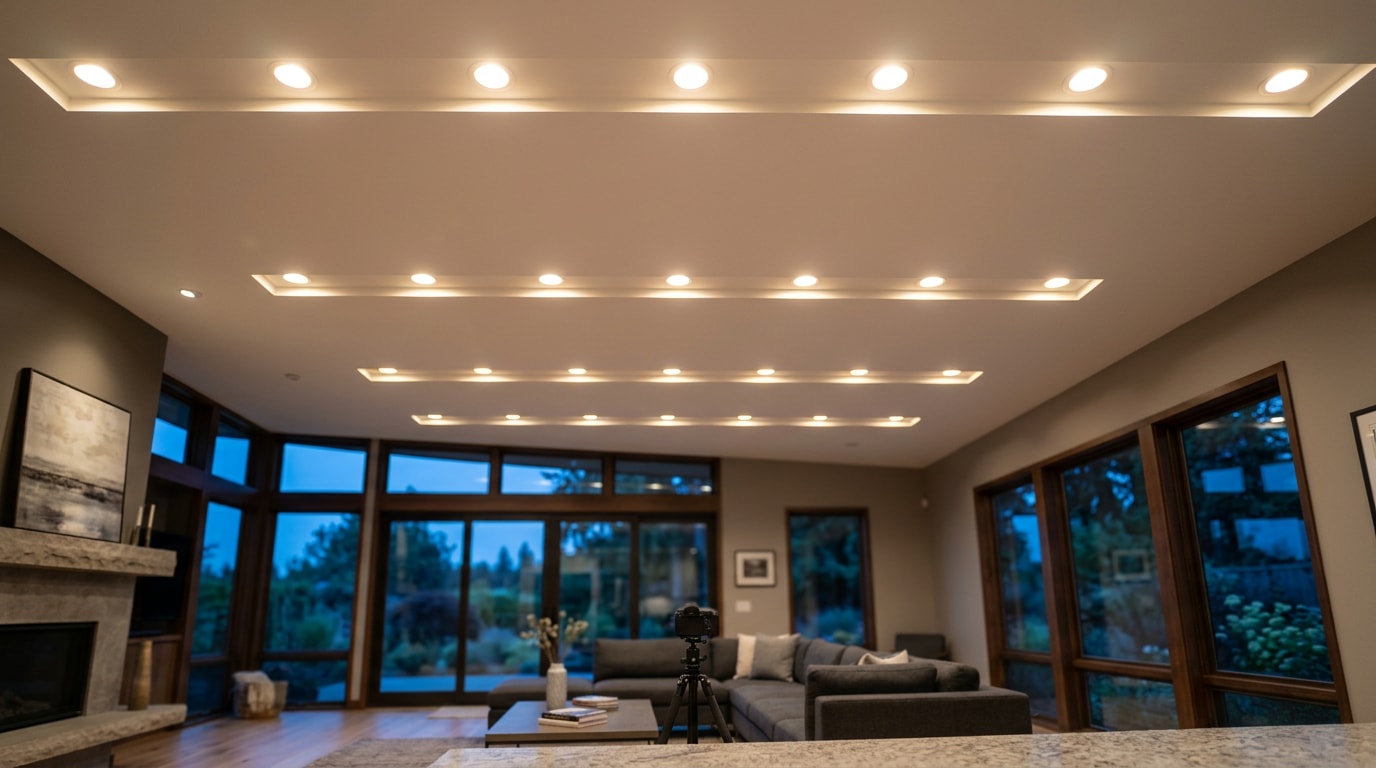
Getting this right pays off beyond safety. A well-planned recessed lighting installation improves resale value, adds better ambiance to kitchens and living rooms, and can lower energy costs when paired with LED can lights instead of older incandescent trims. If you're weighing recessed cans against other fixture types for a single room, our light fixture installation page breaks down the options by space.
Outdoor, Security & Landscape Lighting
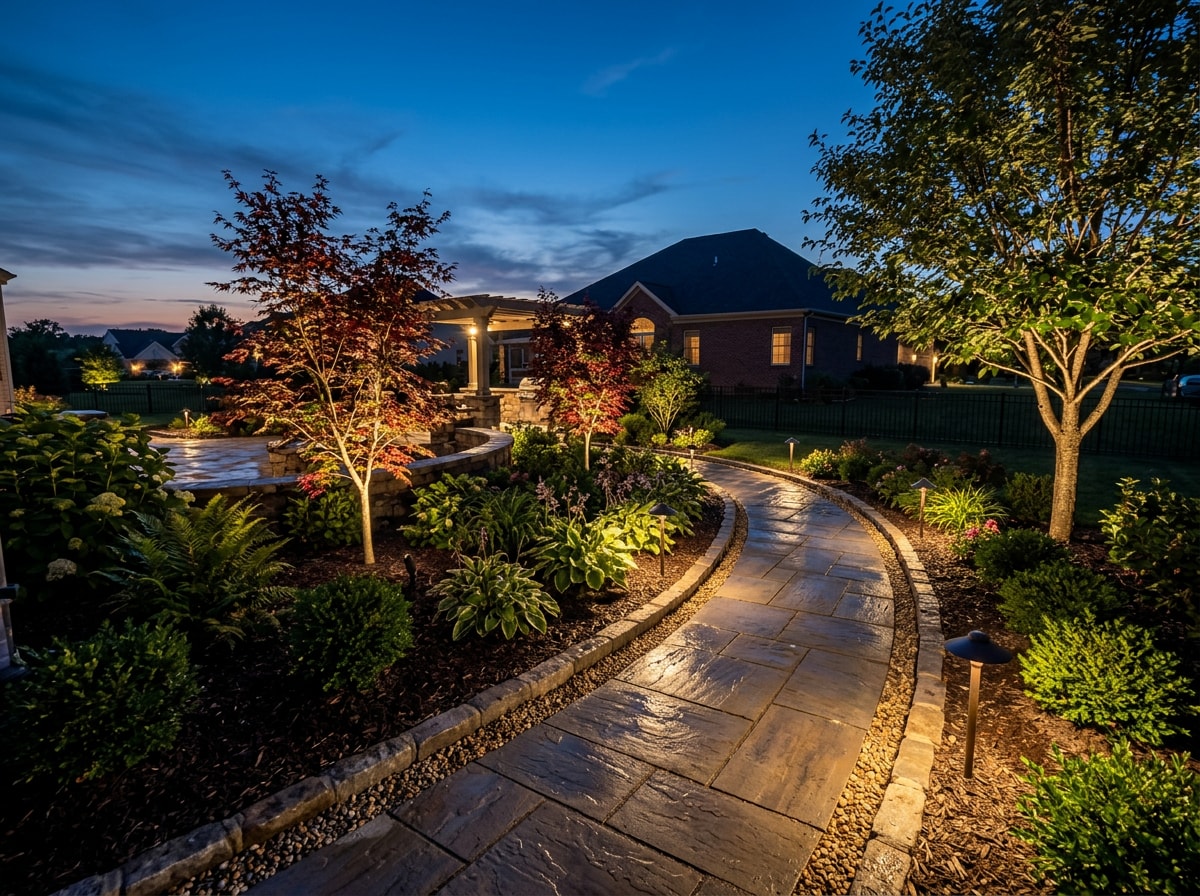
Outdoor lighting installation covers three overlapping needs at once: security, landscape design, and long-term weatherproofing. Motion-activated and dusk-to-dawn flood lights deter break-ins and improve visibility on driveways and walkways. These run on new exterior circuits with weatherproof, GFCI-protected outlets placed for coverage without constant false triggers.
Properties with mature trees, long driveways, or tiered yards need landscape lighting designed for the terrain, not a plug-in transformer kit. That usually comes down to choosing between two approaches:
| Factor | Low-Voltage System | Line-Voltage System |
|---|---|---|
| Install cost | Lower upfront | Higher upfront |
| Lifespan | 10–15 years with quality fixtures | 15–25 years |
| Repair complexity | Simple, transformer-based | Requires licensed electrician, buried conduit |
| Best use | Path lights, accents | Long runs, heavy security lighting |
Weatherproofing failures are a common callback. A fixture box that isn't wet-location rated, or a circuit that isn't GFCI-protected, fails inspection and fails faster in New Jersey winters. Full details on scope and pricing factors are on our outdoor lighting installation page.
Smart Lighting & Dimmer Compatibility
Dimmer switches and smart lighting systems like Lutron Caseta and Leviton Decora Smart need a neutral wire at the switch box. Many older Morris County homes simply don't have that wire. That often means extra wiring work, not just a bulb swap.
Swapping bulbs alone doesn't solve everything either. Incandescent-rated dimmers paired with LED loads tend to hum, flicker, or cut out near the bottom of the slider. Installers match LED-compatible dimmers to the actual fixture wattage to avoid that. Once wired correctly, homeowners adjust brightness, color temperature, and schedules from a phone or voice assistant. ENERGY STAR-certified LED fixtures use up to 90% less energy than incandescent bulbs, last 15 times longer, and save more than $50 in electricity bills over their lifetime , so the swap tends to pay for itself. Homeowners planning a broader retrofit can see what's involved in our lighting upgrades service.
NJ's 2026 Electrical Code Update and What It Means for Your Project
Most lighting-installation guides don't mention this, but it directly affects anyone pulling a permit in Morris County right now. New Jersey's Department of Community Affairs adopted the 2024 International Codes and an updated electrical subcode as part of the state Uniform Construction Code, and these regulations became effective on August 17, 2026 .
What that means in practice:
- Projects permitted before the adoption date can typically finish under the old code edition, as long as the permit stays valid.
- Projects that need a new permit, or a permit resubmission, after the adoption date fall under the updated subcode.
- Electrical permit applications in New Jersey still run through the same forms,
UCC F-100 Construction Permit Application and UCC F-120 Electrical Subcode Technical Section , filed with the local construction office.
For homeowners, the practical takeaway is simple: if you've been sitting on a permit from a prior project, get it closed out or confirm its status before starting new lighting work, since a lapsed permit could mean resubmitting under the newer code.
What Sets Our Lighting Installation Apart
Comparing lighting installation services Morris County, NJ homeowners have access to usually comes down to two things: whether the wiring and permitting are handled correctly, and whether the crew already knows the local housing stock. Every project we run includes code-compliant wiring, permit handling where required, and a licensed electrician on-site through final inspection.
Permit Handling for New Lighting Circuits
Any new lighting circuit, whether it's recessed lights on a new branch, outdoor landscape wiring, or a dedicated bathroom vanity circuit, needs an electrical permit and inspection through the municipality. The NJ UCC requires a permit for installation of new circuits, new wiring, or new service equipment . A licensed contractor pulls the permit, schedules the rough-in and final lighting circuit inspection, and makes sure the work passes the first time.
Permit rules and fees vary somewhat by township within Morris County, so it's worth confirming specifics with your installer rather than assuming one town's process applies everywhere. Reputable electricians handle this paperwork as part of the job, not as a surprise add-on fee, and can confirm status on the electrical inspection side as well.
Decades of Local Experience
Local experience changes how an install actually goes. Electricians who've worked in New Jersey homes for years recognize older knob-and-tube remnants, undersized panels, and split-level wiring quirks before opening a single junction box. That means fewer surprises and a faster, safer installation. We've run into all three on jobs in Denville, Parsippany, and Rockaway in the same month, which is exactly why a pre-installation wiring check is part of every quote we write. Ready to get one started? Get a free estimate and we'll walk the space with you before anything is scheduled.
How Lighting Installation Works, Start to Finish
The lighting installation process follows a consistent sequence regardless of project size:
- Consultation and design, including fixture and color-temperature choices.
- Safety inspection of existing wiring and panel capacity.
- Permit application where the scope requires one.
- Installation, with the circuit tested as it's built.
- Final testing, cleanup, and a walkthrough of the finished system.
After the initial assessment, a written estimate covers labor, materials, permit fees, and inspection costs with no surprise line items added later. Once installed, the crew tests each circuit, cleans the work area, and explains the finished system before wrapping the project.
Other Electrical Services Worth Pairing With Lighting Work
Lighting projects often surface other issues worth addressing at the same time. Aging panels, outdated outlets, and homes without surge protection all become more obvious once new circuits go in. A licensed team can fold in an electrical panel upgrade or light fixture replacement during the same visit, since an upgraded panel often makes future lighting additions easier to wire. If you're specifically comparing recessed options room by room, our write-up on installing recessed lighting in Essex County, NJ covers planning details that carry over directly to Morris County homes.
About the Electrician
This guide was written with input from the licensed electrical team at NJ Queue Electrical, who handle lighting installation, panel upgrades, and electrical inspections throughout Morris County and the surrounding New Jersey counties. For a project-specific answer, including permit requirements for your township, contact us directly.
FAQ
Do I need a permit for lighting installation in Morris County, NJ?
Replacing a fixture on an existing circuit typically does not require a permit. Under NJ's "ordinary maintenance" exception, swapping a switch, outlet, or light fixture for a like item counts as "ordinary maintenance" and needs no permit at all . Adding a new circuit, common when installing recessed lighting in a room with no existing ceiling fixture, does require an electrical permit and inspection, regardless of municipality.
How much does lighting installation cost in Morris County, NJ?
Cost depends heavily on scope. A simple fixture swap on an existing circuit runs far less than adding a new recessed lighting circuit, and outdoor or landscape systems vary by run length and fixture count. Rather than quote a fixed number, most electricians provide a written estimate after seeing the space. LED fixtures also tend to lower long-term bills, which is worth factoring into the overall cost picture.
How long does a lighting installation project take?
A simple fixture swap on an existing circuit is often finished same-day. Projects requiring a new circuit, permit, or landscape system take longer, since they involve a rough-in inspection and a final inspection before the work is complete, typically several days to a couple of weeks depending on municipal scheduling.
Is lighting installation a DIY job, or do I need a licensed electrician?
Like-for-like fixture swaps on an existing circuit are sometimes manageable for a confident homeowner. New circuits, outdoor or landscape wiring, and anything that triggers a permit cross into licensed-electrician territory, both for code compliance and electrical safety. When in doubt, a call to a licensed Morris County electrician is cheaper than a failed inspection.
What happens if my lighting permit was issued before the 2026 code update?
Projects with a permit issued before August 17, 2026 generally continue under the code edition in effect when the permit was issued, as long as that permit stays valid and work proceeds on schedule. If the permit lapses or needs resubmission, the project typically falls under the current subcode instead.
Ready to move forward? Request a free estimate and a licensed electrician will walk the space, confirm permit requirements for your township, and put the full scope in writing before any work starts.