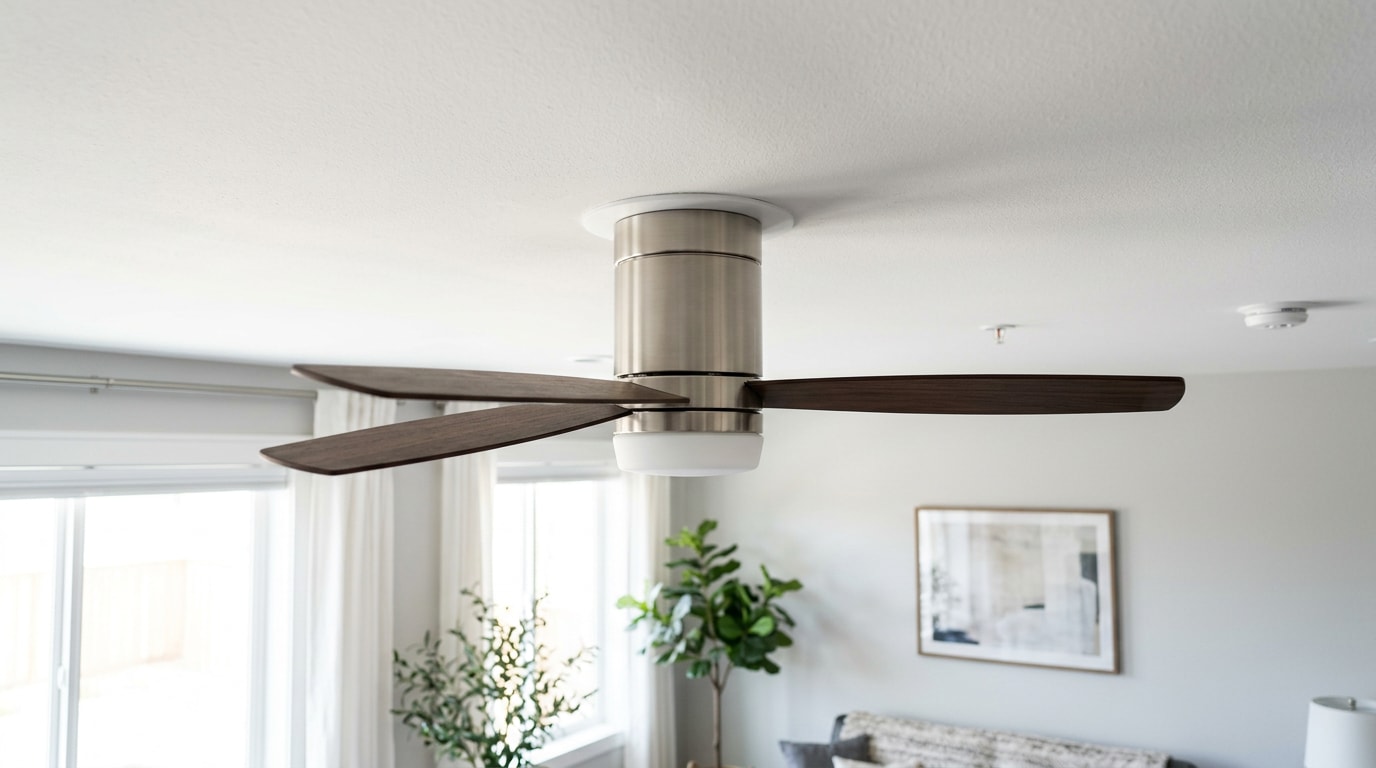
Need an electrician to fix ceiling fan Passaic County, NJ problems like wobbling, humming, or a fan that won't turn on? The cause is usually electrical, not mechanical, and a licensed pro can diagnose it in one visit. This guide covers the warning signs, real repair costs, and the one code rule that trips up most DIY jobs.
Signs Your Ceiling Fan Needs an Electrician, Not a Handyman
Mechanical wear and electrical faults look similar from the floor. A wobble could be a loose blade screw, or it could be a mounting bracket working its way loose inside a box that was never rated for a fan. The table below splits what you can check yourself from what needs a licensed electrician.
| Symptom | Likely Cause | Verdict |
|---|---|---|
| Wobbling at any speed | Loose blade, bent bracket, or undersized box | Check blade balance first; call an electrician if the box itself moves |
| Persistent humming | Failing capacitor or motor winding | Call an electrician; motor repairs involve internal wiring |
| Fan won't turn on | Tripped breaker, bad switch, or wiring fault | Check the breaker yourself; call an electrician if power doesn't return |
| Flickering light kit | Loose bulb or a failing connection | Reseat the bulb first; call an electrician if flickering continues |
| Fan ignores speed changes | Worn pull-chain switch or bad remote receiver | Usually a quick electrician fix, often same visit |
Each of these can look minor until it isn't. A fan that hums for months because of a failing capacitor can eventually overheat the motor housing, and that turns a $100 fix into a full fixture replacement.
DIY Fix or Call an Electrician? Where the Line Is
Not every ceiling fan problem needs a service call. Dead remote batteries, a dusty blade throwing off balance, or flipping the seasonal direction switch are all homeowner-safe fixes that take minutes.
Stop and call a licensed electrician once any of these show up:
- The fan shakes even after you've tightened the blades and balanced them
- You hear grinding, buzzing, or humming from the motor housing
- The fan or lights flicker independent of the bulb
- You're converting a plain light fixture location into a fan location
- The ceiling box moves, cracks, or feels loose when you push on it gently
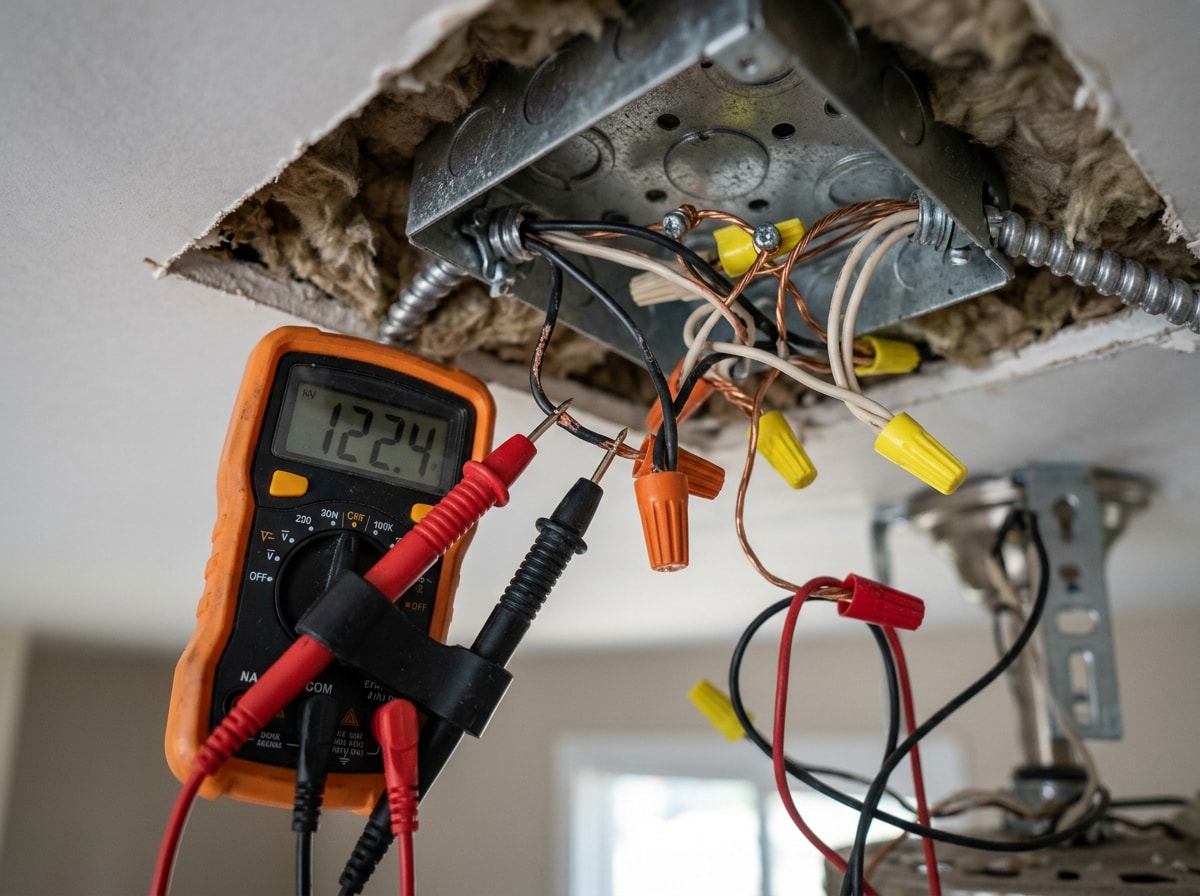
Our Electrical Repair services cover exactly this kind of diagnosis, where a visual check isn't enough and a meter is needed to confirm what's actually failing behind the canopy.
Why the Fan-Rated Box Matters More Than the Fan Itself
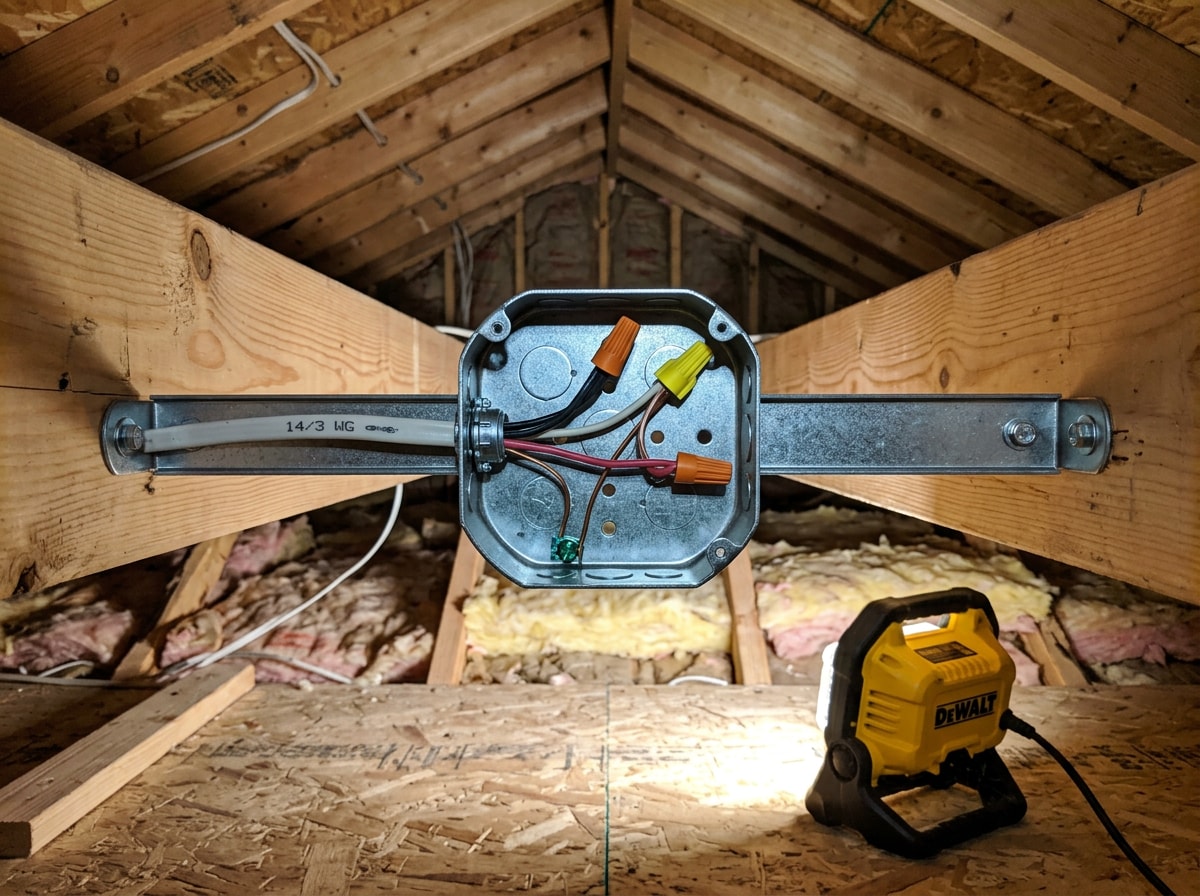
A standard light-fixture box is built to hold a static weight. It was never designed for the constant vibration of a spinning fan motor, and that distinction is the whole reason code treats fan boxes as a separate category. The National Electrical Code, maintained by the National Fire Protection Association, codifies the requirements for safe electrical installations into a single, standardized source, and the authority having jurisdiction inspects for compliance with these minimum standards . In Passaic County, that inspection authority is the local building department, not the fan manufacturer's instructions.
Mounting bracket failures aren't theoretical. Consumer Product Safety Commission recall records for ceiling fans repeatedly cite the same failure mode: the hanger bracket can break, which could cause the fan to fall from the ceiling and seriously injure anyone standing nearby . That's a manufacturer defect, not an installation error, but it's the same reason a correctly rated, properly braced box matters even more: it's the backup that keeps a bracket failure from becoming a falling fixture.
If your ceiling fan is going into a location that previously only had a light fixture, assume the box needs to be swapped before the fan goes up. An electrical inspection before you buy a fan can confirm whether the existing box, wiring, and switch leg can support what you're planning. For a deeper look at what inspectors check in this county, see our guide on electrical inspection requirements in Passaic County.
What Ceiling Fan Repair Costs in Passaic County, NJ
| Repair Type | What's Typically Involved | General Cost Range |
|---|---|---|
| Switch or pull-chain repair | Replace failed internal switch | Lower end of the range |
| Capacitor or motor repair | Diagnose humming, replace capacitor or rewind | Mid-range, more labor time |
| Box swap to fan-rated | Remove old box, install braced fan-rated box | Higher end, often bundled with install |
| New fan installation, no prior wiring | Run new circuit, install box, mount fan | Highest, treated as new wiring work |
Costs move with diagnosis time and whether the existing box is already fan-rated. A straightforward switch swap is a short visit. A motor or wiring repair that requires pulling the fan down, testing with a meter, and reassembling can run an hour or more of labor. Electrician labor rates track skilled-trade wages broadly, and the median annual wage for electricians was $63,190 in May 2025 , according to the U.S. Bureau of Labor Statistics, a useful benchmark when you're comparing quotes from different contractors.
Repair, Replace, or New Installation?
These three jobs sound similar but aren't priced or scoped the same way.
- Repair keeps your existing fan and fixes the fault, whether that's a switch, capacitor, or loose wiring connection.
- Replacement swaps the fan unit itself but reuses the existing fan-rated box and wiring, which keeps the job fast.
- New installation adds a fan where none existed, which usually means new wiring, a new box, and sometimes a new switch leg for separate fan and light control.
If you're also updating the light kit while you're at it, our light fixture installation team can handle both in the same visit so you're not paying for two separate service calls.
Get More Out of the Fan Once It's Fixed
A properly working fan isn't just quieter, it's doing real work on your energy bill. According to the U.S. Department of Energy's Energy Saver program, running ceiling fans counterclockwise in summer creates a cooling breeze, reversing to clockwise on low speed in winter circulates warm air down from the ceiling, and using a ceiling fan allows you to raise the thermostat setting by about 4°F without reducing comfort . If you're shopping for a replacement rather than a repair, ENERGY STAR certified ceiling fans are up to 60% more efficient than conventional models , which is worth factoring into the repair-versus-replace decision above.
Passaic County Towns We Serve
We cover ceiling fan repair, replacement, and new installation throughout Passaic County, including Clifton, Wayne, Totowa, Woodland Park, Little Falls, Paterson, and Hawthorne. Check our Passaic County service area page to confirm coverage for your town, or visit our homepage for our full list of electrical services.
Ready to get the wobble, hum, or dead fan sorted out? Get a Free Estimate and we'll schedule a licensed electrician to diagnose it and quote the fix before any work starts.
FAQ
How much does it cost to fix a ceiling fan in Passaic County?
It depends on the fault. Switch and remote issues are the cheapest fix. Capacitor or motor repairs cost more because they involve more diagnostic and labor time. Box swaps to a fan-rated box run highest since that's treated as electrical installation work, not a simple repair.
Can a handyman fix a ceiling fan, or do I need an electrician?
A handyman can usually handle cosmetic issues like reseating a bulb or cleaning blades. Anything involving wiring, the box, the switch, or the motor should go to a licensed electrician, since those repairs fall under electrical code, not general handyman work.
Why is my ceiling fan wobbling or making noise?
Wobbling is usually a loose blade, a bent mounting bracket, or a box that isn't rated or braced for fan use. Humming is almost always a failing capacitor or motor winding. Both point to different fixes, which is why diagnosis matters before parts get replaced.
Do electricians install ceiling fans in Passaic County?
Yes. Licensed electricians handle both installation and repair, including mounting the fan on a code-compliant box, wiring it correctly for fan and light control, and balancing it for quiet operation.
How long does a ceiling fan repair take?
Most repairs take one to three hours. The electrician typically needs to remove the fan, test the wiring and components with a meter, and confirm the fix before reassembling.
Do I need a permit to replace a ceiling fan box?
If you're reusing the existing fan-rated box and wiring, most jurisdictions don't require a permit. If the box needs to be swapped for a fan-rated one, or if new wiring is being run, that typically does require a permit and inspection. Your local Passaic County building department can confirm what applies to your specific job.